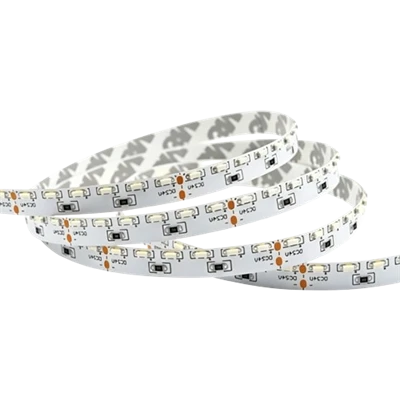

As LED lighting technology continues to advance, LED strip lights are becoming increasingly popular in residential interiors, commercial displays, architectural lighting, and outdoor landscaping. Their energy efficiency, flexible installation, and versatile lighting effects make them suitable for a wide range of applications. Depending on their light output, circuit design, control features, and protective construction, LED strip lights are available in several types to meet different functional and decorative requirements.
Based on light color, LED strips can be classified into single-color, tunable-white, and multicolor models. Single-color strips emit a fixed color, such as red, green, blue, or white, making them suitable for general illumination and decorative accents. Tunable-white strips allow users to adjust the color temperature between warm and cool white, offering greater flexibility in living rooms, bedrooms, and commercial interiors. RGB and RGBW strips can produce a broad range of colors, making them ideal for holiday decorations, stage designs, and smart ambient lighting.
LED strip lights also differ in their electrical design and power requirements. Common options include low-voltage models and strips designed for direct mains-powered operation. Low-voltage strips generally require a compatible power supply and are well suited to cabinets, furniture, and decorative installations. Mains-powered products can be suitable for longer lighting runs when used according to their specifications. However, electrical insulation and protection against electric shock are essential, and such products must not be cut or connected arbitrarily.
Based on their physical construction, LED strips are available in flexible and rigid formats. Flexible strips use bendable circuit boards that can follow curved surfaces, ceiling details, and furniture contours. Rigid LED bars provide greater structural stability and are suitable for display cabinets, equipment interiors, and installations that require a straight, fixed lighting profile.
Protection against environmental conditions is another important distinction. Products range from basic designs to models with enhanced dust and moisture resistance for specific indoor or outdoor applications. Buyers should select an appropriate ingress protection rating based on the installation location, humidity, and potential exposure to water. Power supplies and electrical connections must also meet the relevant safety requirements.
As demand for smart homes and personalized lighting continues to grow, LED strip technology is evolving toward more intelligent controls, improved luminous efficacy, and greater application flexibility. By considering light color, power requirements, physical construction, and protection ratings, users can select the right LED strip lights for their needs and achieve better lighting performance and usability.