
As electronic technology continues to advance, LED seven-segment displays remain widely used in measuring instruments, electronic devices, household appliances, and industrial control systems. Their clear visibility, fast response, and relatively low power consumption make them a practical solution for displaying numerical information and monitoring equipment operating status.
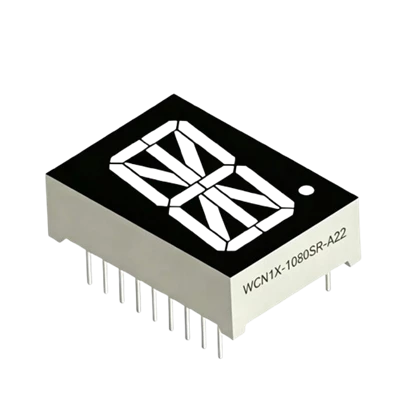
An LED seven-segment display typically consists of light-emitting diodes (LEDs), an outer casing, internal electrodes, and connecting pins. Its core design features seven individual LED segments arranged to form numerical characters. Many models also include a separate decimal-point indicator. By switching specific segments on or off, the display can represent the numbers zero through nine. Depending on the model, it may also display selected letters and other symbols to meet different application requirements.
LED seven-segment displays are generally classified into two types according to their internal electrical connections: common-anode and common-cathode displays. In a common-anode configuration, the anodes of the LED segments are connected together. In a common-cathode configuration, the cathodes share a common connection. These two designs require different driving arrangements, allowing engineers to select the appropriate type based on the requirements of the control circuit and achieve reliable, accurate display performance.
LED seven-segment displays offer several advantages, including high brightness, good readability, long service life, and straightforward maintenance. Their relatively simple construction and well-established control methods also make them easy to integrate with microcontrollers and other digital control systems, helping reduce equipment design and maintenance costs. However, applications involving multiple digits require careful driver circuit design. Proper current limiting, heat management, and display refreshing are also essential to ensure stable operation.
As smart manufacturing and electronic equipment continue to evolve, LED seven-segment displays are expected to remain an important component in industrial instruments, counters, electronic scales, and various digital display terminals. Further improvements in structural design and driving technology may enhance their performance and reliability, providing practical and cost-effective solutions for electronic information display applications.