
As electronic technology and digital equipment continue to advance, LED digital displays remain widely used in electronic instruments, industrial controls, household appliances, and other digital systems. Their clear visibility, fast response, reliable performance, and mature driving technology make them a practical choice for numerical information display. Depending on their segment configuration, electrical structure, package design, and intended application, LED digital displays are available in several different types.
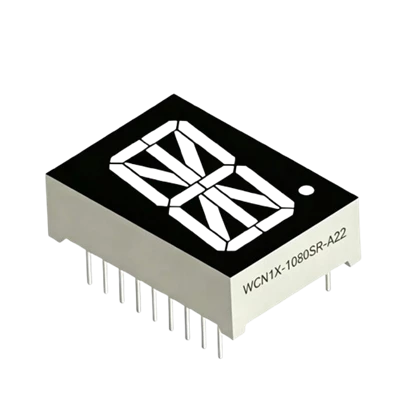
Based on segment configuration, common LED digital displays include seven-segment, fourteen-segment, and sixteen-segment designs. Seven-segment displays use seven individual LED segments to form numerical characters from zero to nine. Their straightforward structure and well-established driving method make them particularly suitable for digital clocks, counters, meters, and basic control interfaces. Fourteen-segment and sixteen-segment displays contain additional segments, allowing them to reproduce a wider range of letters, numbers, and symbols. This makes them suitable for equipment that needs to present more detailed alphanumeric information.
LED digital displays can also be classified according to their internal electrical configuration. Common-anode displays connect the anodes of their LED segments to a common terminal, while common-cathode displays share a common cathode connection. These two configurations require different driving methods, so the appropriate type must be selected according to the control circuit, driver architecture, voltage requirements, and other electrical specifications of the system.
Package and mounting methods provide another way to distinguish LED displays. Through-hole designs are widely used in conventional electronic equipment and control panels because of their established construction and straightforward installation. Surface-mount versions offer a more compact form factor and are well suited to automated assembly processes and space-constrained electronic products.
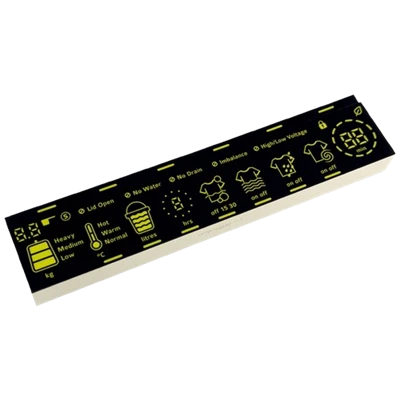
LED digital displays are also available in a variety of colors, including red, green, blue, and yellow. Different brightness levels and character sizes can be selected according to viewing distance, ambient lighting, and application requirements. For specialized applications, manufacturers can also customize dimensions, character height, color, brightness, pin configuration, and other specifications.
Each type of LED digital display has its own advantages and suitable applications. As electronic products continue to become smaller, smarter, and more demanding in terms of reliability, improvements in materials, packaging, and driving technologies are expected to further expand the flexibility and performance of LED digital displays across a wide range of industries.