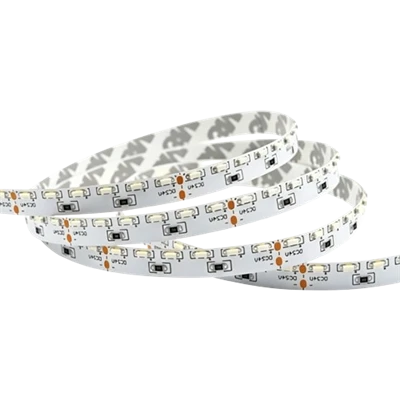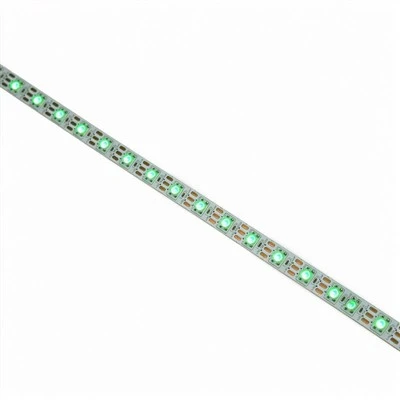

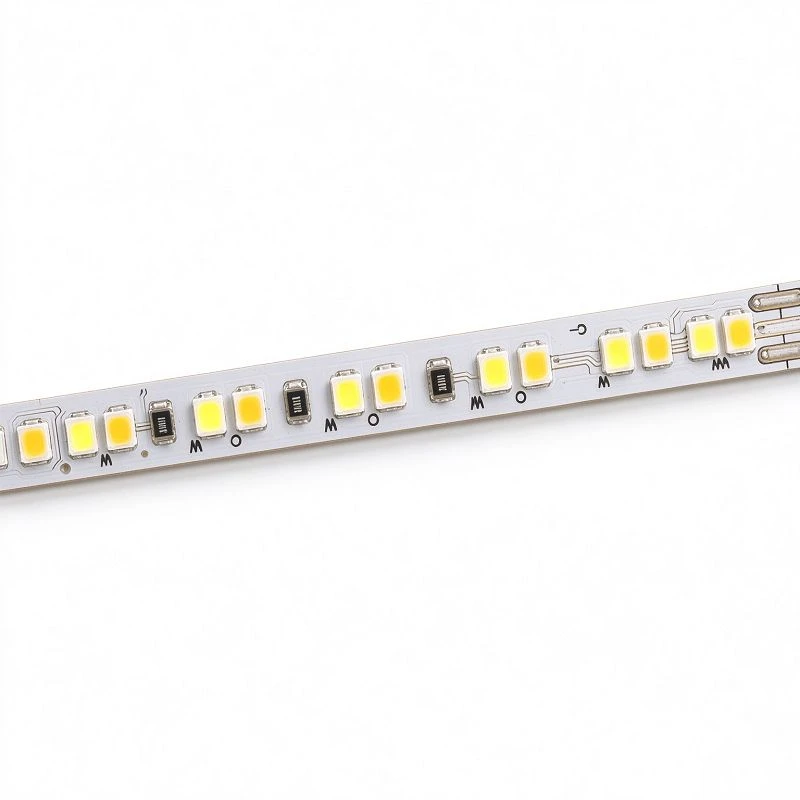


WCN OPTO Group Co., Limited is one of the most reliable manufacturers and suppliers of flexible led strip in China. With abundant experience, we are committed to providing high quality customized products with competitive price. If you're going to wholesale bulk premium flexible led strip, welcome to get pricelist from our factory.
The Strips Manufacturing Process
Everything starts on a polyimide (PI) FPC substrate. It's the material that lets a strip survive repeated bending without the copper traces fatiguing - important for anything going into a vehicle, a retail display that gets rearranged often, or a DIY install where the strip gets flexed a few times just during mounting.
From there, LED chips and resistors go on through automated SMT placement, positioned to within 0.1mm. Solder paste volume gets checked before reflow, and every panel passes through AOI (Automated Optical Inspection) so misaligned components, solder bridges, or missing parts get caught before anything is cut and packaged.
Waterproofing depends on what the project needs - a UV-cured PU coating gets you IP65 splash resistance, while full silicone encapsulation is what makes IP67 or IP68 submersible-rated. We test coating thickness and adhesion in-house rather than taking a supplier's word for it.
Bend radius is tested per product series, not just estimated. Each series gets cycle-tested at its rated radius to make sure the copper traces and solder joints hold up without cracking - this matters most once a strip is inside a tight channel that's hard to access later if something fails.
Before mass production, sample batches also go through high/low temperature cycling, and outdoor-rated strips get salt spray testing on top of that.
Keeping Color Consistent
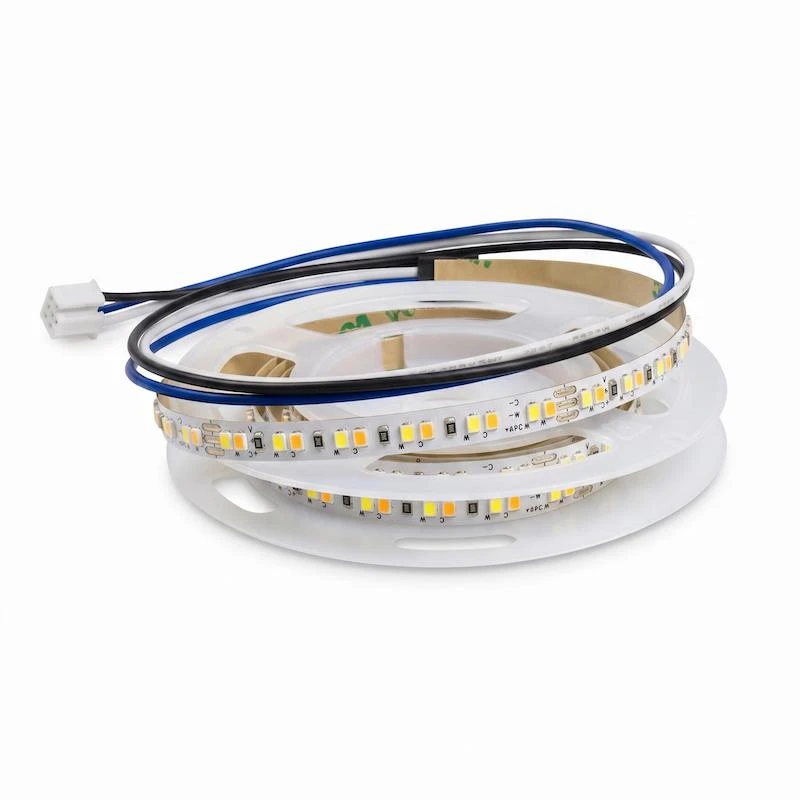
LED chips are sourced within a tight color bin for both temperature and brightness, and we don't mix chips across production lots. Practically, that means a 5-meter cut from the middle of a reel matches a cut from the end - no visible color banding down a long hallway or across a row of display shelves.
CRI ranges from 80 for general ambient use up to 90+ and 95+ for retail, gallery, or hospitality projects where color accuracy actually matters. Color temperature spans 2700K warm white to 6500K daylight, and tunable white (CCT) is available on a single run if needed.
We track lumen depreciation through extended burn-in testing. Standard-grade strips meet common L70/L80 benchmarks - for example, L70 at roughly 30,000 hours and L80 at roughly 20,000 hours, depending on the series. Buyers evaluating strips for longer commercial installs are welcome to the underlying test data.
For RGB, RGBW, and RGBCW strips, the red, green, blue, and white channels are calibrated together at the factory rather than left for the controller to sort out. That's what keeps white balance from drifting toward pink or green at low brightness - a weak spot in a lot of cheaper strips.
Working With Us
New clients - or anyone placing a first order in an unfamiliar IP rating, CCT spec, or certification requirement - are better off starting with samples or a small trial batch before committing to full production. It saves everyone a headache later.
Custom cut lengths, custom voltage (5V/12V/24V), custom color temperature and CRI, custom PCB width and trace layout, and private-label packaging for OEM orders are all on the table, and honestly this is where most of our wholesale and OEM business comes from.
We provide CE, RoHS, and UL/ETL documentation matched to whatever your target market requires for import and retail. Reels ship in moisture- and impact-resistant packaging built for ocean and air freight, and we send orders regularly to North America, Europe, Australia, and the Middle East.
Common Questions
What's the minimum bend radius, and does bending shorten the strip's lifespan?
It varies by series and PCB width - typically 15mm to 30mm across our standard products. Staying at or above the rated radius won't meaningfully shorten lifespan; going tighter than rated can crack traces or solder joints over time. We list the tested minimum for each product so you can check it against your installation before ordering.
IP65 or IP67 - which one do I need outdoors?
IP65 is coated to resist splashing water and dust, which works for covered outdoor areas or damp indoor spots, but not submersion. IP67 (and IP68) is fully silicone-encapsulated and can handle temporary submersion - the right call for direct outdoor exposure, landscape lighting, or anywhere standing water is a possibility.
Should I go with 12V or 24V?
Both are low-voltage and safe for residential or commercial use. 24V loses less to voltage drop over long runs, so it's the better pick for continuous runs past 5 meters. 12V is more common for shorter runs and plays nicely with the 12V drivers and dimmers already out there.
Can it be cut without messing up the rest of the reel?
Yes - marked cut points, usually every 2.5cm, 5cm, or 10cm depending on density, let you cut the circuit cleanly without affecting the LEDs on either side of the line.
What's the MOQ, and can I get samples first?
MOQ depends on how customized the spec is - standard products carry lower minimums than fully custom builds. Samples are available before you commit to a production order.
Got a specific project - hospitality, retail, outdoor architectural lighting, or an OEM/private-label run? Send over the length, voltage, IP rating, and color temperature you're working with, and we'll point you to the right spec.
Hot Tags: flexible led strip, China flexible led strip manufacturers, suppliers, factory