
PCBA Structural Design Supports Greater Integration in Modern Electronics
As electronic technology and smart manufacturing continue to advance, printed circuit board assembly (PCBA) has become an essential part of modern electronics production. PCBA involves mounting and soldering electronic components onto a printed circuit board to create a functional electronic assembly. Its structural design directly affects electrical performance, space utilization, thermal management, and long-term reliability.
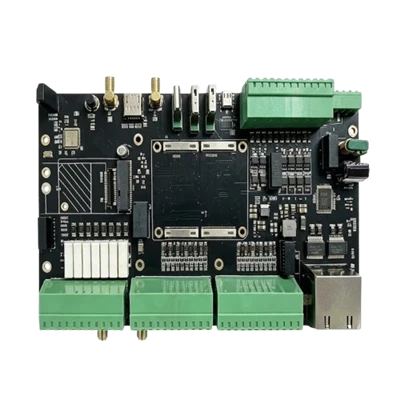
A typical PCBA consists of a printed circuit board, surface-mount components, solder joints, and conductive traces. The PCB serves as the foundation for component placement and provides the electrical pathways needed for circuit operation. Depending on the application's requirements, it may feature a single-layer, double-layer, or multilayer design to accommodate different levels of circuit complexity, signal routing, and space constraints.
Surface-mount components form the core of the assembly. These include resistors, capacitors, diodes, integrated circuits, and various sensors. Mounted directly onto the PCB surface, they work together to perform the required electronic functions. Compared with conventional through-hole components, surface-mount devices are generally smaller and support higher component density, helping manufacturers reduce board size and increase product integration.
Solder joints are essential to the structural integrity of a PCBA. During manufacturing, processes such as solder paste printing, automated component placement, and reflow soldering establish electrical and mechanical connections between the components and the PCB pads. The quality of these joints affects signal transmission, power delivery, and the assembly's ability to withstand vibration and temperature changes over time.
PCBA design must also account for trace routing, signal integrity, electromagnetic compatibility, and heat dissipation. In high-power or densely populated circuits, engineers need to plan power distribution, grounding structures, and thermal paths carefully to reduce electrical interference and localized overheating. The design should also support efficient automated assembly, inspection, and future maintenance.
As electronic products become smaller, lighter, and more powerful, PCBA structures continue to evolve. Through optimized circuit layouts, precise component placement, and rigorous process control, manufacturers can improve integration and production efficiency. These advances provide a reliable hardware foundation for smart home appliances, communication systems, industrial controls, and consumer electronics.