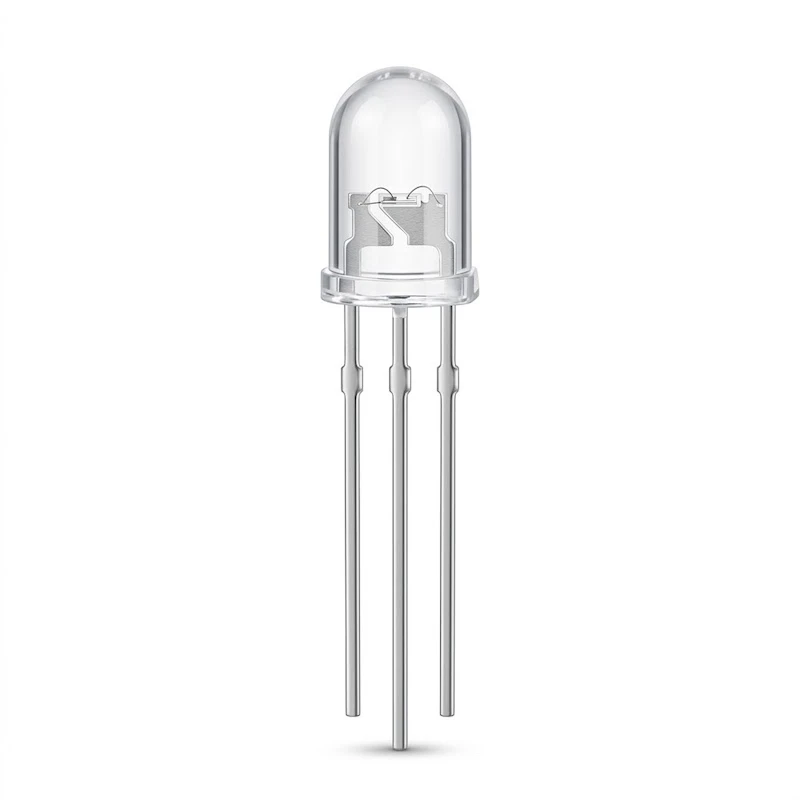

As electronic devices, indicator systems, and lighting products continue to evolve, through-hole LEDs remain widely used in household appliances, industrial control panels, electronic instruments, and decorative lighting. Their straightforward construction, convenient installation, and broad range of specifications make them suitable for many applications. Choosing the right component requires careful consideration of electrical performance, optical characteristics, mechanical dimensions, and operating conditions.
The first step is to identify the requirements of the intended application. Different products have different needs in terms of light color, brightness, installation space, and environmental resistance. For example, status indicators generally need to be clearly visible, while decorative applications may place greater emphasis on color appearance and visual effects. Defining these requirements in advance helps narrow down the available options.
Electrical specifications are another essential consideration. Forward voltage, operating current, and power consumption are key parameters when selecting a through-hole LED. Forward voltage varies by LED color and model, so the component must be compatible with the circuit design. An appropriate current-limiting resistor or constant-current driver should be used to prevent excessive current, overheating, and premature failure. The LED's rated operating conditions must also match the characteristics of the power supply.
Optical performance is equally important. Luminous intensity, viewing angle, and color consistency all influence how an LED performs in practice. Applications that require visibility from a distance may benefit from LEDs with higher luminous intensity or a suitably narrow viewing angle. For applications that need broader visual coverage, a wider viewing angle and appropriate light distribution may be more suitable.
Package dimensions, lead spacing, and mounting requirements should also be checked before purchase. Confirming the LED's body diameter, lead length, and package specifications helps ensure compatibility with the printed circuit board. For industrial equipment and products designed for continuous operation, buyers should additionally evaluate the operating temperature range, vibration resistance, expected service life, and the supplier's quality control practices.
As electronic products become more compact and energy-efficient, selecting through-hole LEDs increasingly depends on matching component performance to specific application requirements. By evaluating electrical specifications, optical characteristics, mechanical dimensions, and environmental suitability, manufacturers and users can improve product reliability and achieve consistent performance across a wide range of applications.