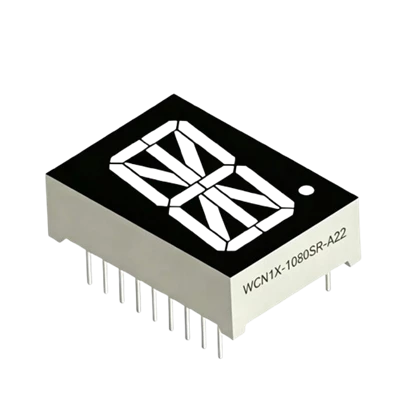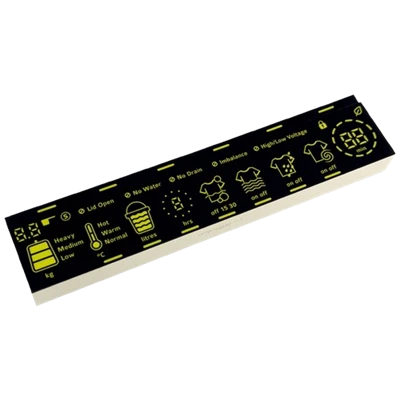

As electronic technology and industrial automation continue to advance, LED seven-segment displays are widely used in measuring instruments, industrial control systems, household appliances, electronic scales, and digital display terminals. Their technical specifications directly affect display quality, driver circuit design, operating stability, and overall equipment performance. Understanding these specifications is therefore essential when selecting components and developing reliable electronic products.
The number of digits and supported characters are among the most basic specifications. Depending on the application, LED displays are available in single-digit, two-digit, four-digit, and multi-digit configurations. Standard seven-segment models primarily display numbers from zero to nine, while some versions also support selected letters, symbols, and decimal points. These features make them suitable for counting, measurement, and data monitoring applications.
Electrical characteristics, including operating voltage, operating current, and forward voltage, are critical to driver circuit design. LED displays generally require an appropriate driver circuit, with current-limiting resistors or constant-current drivers used to prevent excessive current from damaging the LEDs. Since electrical characteristics vary by model, LED color, chip design, and internal connection configuration, the manufacturer's datasheet should always be consulted for accurate specifications.
Brightness, emission color, and wavelength are also important selection criteria. Common display colors include red, green, yellow, blue, and white. The chosen color and package design influence visibility and overall display performance. For applications exposed to strong ambient lighting, brightness should be selected according to viewing distance, display size, and environmental conditions.
Other important specifications include operating temperature range, physical dimensions, pin configuration, package type, and expected service life. For multi-digit displays, designers should also consider multiplexing methods, refresh frequency, and brightness uniformity. Proper design helps ensure stable operation and minimizes problems such as flickering or uneven illumination.
As electronic products become smaller, more energy-efficient, and increasingly integrated, careful specification selection and driver design are becoming more important. By evaluating electrical performance, display requirements, installation space, and operating conditions together, manufacturers can choose suitable LED displays and improve system reliability and efficiency. This approach helps ensure dependable performance across a wide range of digital display applications.